Commercial window tinting in Ottawa, for glass that works
Offices that are too hot by three o'clock, boardrooms everyone can see into, clinics that need privacy, and shop windows that bleach the stock: commercial window tinting solves each of these with a film made for it, usually without closing for a day.
At a glance
- For
- Offices, clinics, storefronts, restaurants, condos
- Films
- Solar, frosted, decorative, safety, bird-safe
- Disruption
- After hours or floor by floor
- Privacy
- Day and night with frosted and decorative film
- First step
- A walk-through of the glass and the problem
What commercial window tinting is for
Commercial window tinting is window film applied to the glass of offices, stores, clinics, restaurants, schools and multi-unit buildings. The films are the same families used at home, solar control, privacy, decorative and safety films, but the jobs are larger, the glass is often more varied, and the reasons are usually about how a space works rather than how it looks.
In Ottawa, those reasons tend to come in a few familiar shapes. Office floors with a west wall of glass that nobody wants to sit beside after lunch. Glass-walled boardrooms and private offices where conversations need to stay private. Medical and dental clinics where patients must not be seen from the street or the waiting room. Storefronts where the sun fades merchandise in the window. And street-level glass that needs to hold together if someone throws a rock through it.
Each has a film made for it, and many buildings need more than one. A good commercial job starts with a walk-through, window by window, before any film is chosen.
Which film is right for you?
Say where the glass is and what you want from it. The answer names a film type and why, the same way it would be explained in person.
Where is the glass?
What matters to you? Pick all that apply.
Commercial window film, by job
The main films used on Ottawa offices and storefronts, and what each one solves.
Privacy for boardrooms, clinics and open offices
Glass partitions are everywhere in modern offices because they let light deep into a floor. The cost is privacy. A frosted film solves it while keeping most of the light: a band at seated eye level, a full frosted panel, or a gradient that fades from clear to frosted.
Frosted films are private at every hour, because they scatter light in both directions. That makes them the right choice for clinics, counselling rooms, HR offices and anywhere conversations or patients must not be seen. Reflective films, by contrast, only give privacy while the outside is brighter than the inside; in an office lit at night, they let people see in.
Decorative film turns the same idea into design: a pattern, a stripe of the company colour, or a logo cut into frosted film on the boardroom door. It is also how many offices meet the practical need to make large glass panels visible, so that nobody walks into them.
Heat and glare on Ottawa office floors
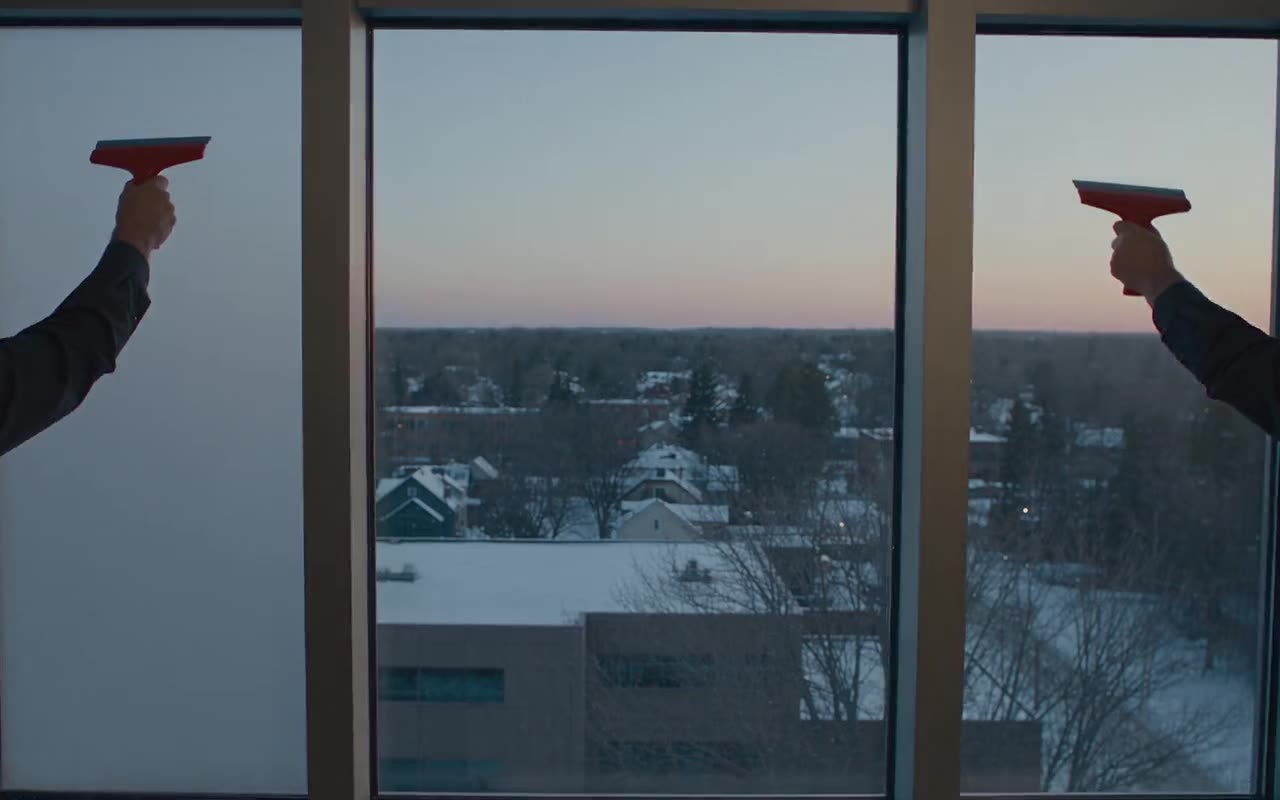
An office with a lot of glass is a greenhouse with desks in it. On a sunny afternoon, the west and south sides of a floor can run several degrees warmer than the core, the blinds come down, the lights go on, and the people on that side of the building complain to facilities.
Solar control film is made for that. It turns back part of the sun's heat at the glass, cuts glare on monitors, and blocks 99% or more of UV, so the blinds can stay up and the space can be used. For buildings where the look of the facade matters, low-reflectance and spectrally selective films keep the glass looking much as it did.
Glass in commercial buildings is varied, and thermal stress is a real consideration on large, tinted or coated insulated units. Film makers publish guidance on which films suit which glass, and that guidance is followed on every job. Where a building owner or property manager needs documentation for approval, the film specifications and the glass assessment are provided in writing.
Storefronts: protecting the stock and the glass
For a shop, the front window is the most valuable piece of advertising it owns, and it faces the weather every day. Sun fades the merchandise in it, and street-level glass is the first thing hit in a break-in.
A clear UV film protects window displays without changing how they look from the street. A light solar film keeps the front of the store comfortable on summer afternoons. Security film holds the glass together when it is struck, so a break-in takes longer and makes more noise, and the glass does not fall into the store or onto the sidewalk.
Decorative and printed films add store hours, logos, frosted bands and seasonal graphics, and can come off cleanly when the design changes.
For a storefront
- Merchandise fading
- Clear UV film that blocks 99% or more of UV.
- Hot front of store
- Light or spectrally selective solar film.
- Break-ins and vandalism
- Security film, with edge anchoring on large panes.
- Scratched or tagged glass
- Replaceable anti-graffiti film.
- Signage and privacy
- Cut vinyl, frosted bands and decorative film.
Several films can be combined on one window: for example, UV control with a frosted band at the bottom.
How a commercial window film job is run
Most businesses cannot close for a day, so commercial jobs are planned around the building rather than the other way round.
Walk-through
Every window type is noted: glass, size, elevation, shading and the problem it causes. Photos and measurements are taken.
Proposal
You get the recommended film for each area, the reason for it, the film maker's specifications and a firm price.
Approvals
Where a landlord, condo board or property manager has to approve, the documentation is provided.
Scheduling
Work is booked after hours, on weekends, or floor by floor, so the business keeps running.
Installation
Glass is cleaned, film is applied and trimmed, and work areas are left clean each day.
Handover
A walk-through of the finished glass, with care instructions for the cleaning staff.
Who uses commercial window tinting in Ottawa
A sample of the spaces where commercial film makes the most difference.
Solar film and the look of a building
Building owners and property managers usually have one question before any other: will the building look different afterwards? With the right film, very little. Modern solar control films come in neutral, low-reflectance versions that keep the glass looking much as it did from the street, and spectrally selective films that are nearly clear. The mirror-finish films of the 1990s are still made, but they are rarely the right choice on an occupied office building today.
Where appearance matters, the usual approach is a mock-up: a sample of the chosen film on one pane, viewed from outside at different times of day, before the whole elevation is done. It is the simplest way for a landlord, a condo board or a heritage review to approve a film with confidence, and it takes the guesswork out of matching new film to existing glass.
Consistency matters too. A building with film on some floors and not others, or two different films side by side, looks patched. When only some tenants want film, it is worth agreeing on one product for the building so that every installation matches.
Commercial window tinting in an Ottawa climate
Ottawa buildings have to deal with both ends of the thermometer, and commercial film is chosen with that in mind. In summer, the west and south elevations of an office can carry a heavy cooling load in the afternoon, and a solar film that turns back part of the sun's heat helps the system keep up and the occupants stay comfortable. In winter, the same glass loses heat, and a low-E film can reduce that loss on older glazing.
There is also the question of daylight. Many offices want as much natural light as they can get, especially in the dark months, and the trend in commercial film has been toward films that cut heat and glare while keeping visible light high. A darker film is still the right answer for some problems, such as a glare-heavy west wall in a space full of screens, but it is rarely the first choice.
Finally, there is timing. Film is best applied when the glass is not frozen and the building is heated, which in practice means it can be done all year indoors. Exterior-applied films, used on some glass types and for anti-graffiti work, are better scheduled for the warmer months.
Questions property managers ask
The same questions come up on most commercial jobs, usually from whoever has to approve the work.
Making large glass visible
Large glass panels and doors are easy to walk into when they are clean and the light is behind them. Many building codes and accessibility standards expect glazed doors and full-height glass to carry some kind of visual marking, and many building owners add it simply to prevent injuries.
Frosted bands and dot patterns at standing and seated eye level are the usual answer. They can be plain, or carry a pattern or a logo, so the safety marking becomes part of the design. The same idea, with tighter spacing, is used on bird-safe film: markers spaced closely enough that birds see the glass as a barrier.
Ask about both when glass walls or doors are being frosted for privacy; it is easy to solve all three needs with one film.
For commercial window tinting anywhere in Ottawa, from a single storefront to a full office floor, call 613-851-7831 or send the form below. You get a walk-through, a written proposal with the film specifications, and a firm price before any work is booked.
Questions people ask
Can window film be installed without closing my business?
Yes. Commercial jobs are usually scheduled after hours, on weekends or floor by floor, so the space keeps working.
What film gives privacy in a boardroom?
Frosted or decorative film. It blurs the view both ways and works at every hour, unlike reflective film, which only gives privacy when it is brighter outside.
Does office window film reduce cooling costs?
Solar control film reduces the heat coming through sunny glass, which lowers the load on cooling. How much depends on the building, the glass and the film; the film maker's specifications give the performance figures.
Do I need my landlord's approval for window film?
Often, yes, especially for films that change how the building looks from outside. The film specifications can be provided for an approval request.
Can security film stop a break-in?
It does not make glass unbreakable, but it holds broken glass together so getting through takes much longer and makes more noise. Edge anchoring makes it stronger on large panes.
Can film be removed later?
Yes. Commercial films can be removed and the glass cleaned, which is why decorative and branding films are popular for leased spaces.
How long does commercial window film last?
Interior commercial films commonly last many years. Each film maker's warranty states the term for its product, and the documentation is provided with the job.
Do you do bird-safe window film?
Yes. Patterned films make glass visible to birds, and the City of Ottawa's Bird-Safe Design Guidelines list window markers as a fix for existing buildings.
More from Ottawa Window Tinting
For the full picture, from Ontario's tint rules to the types of film, see the main page for window tinting in Ottawa, or go straight to a service.
Tell us what you want to tint
613-851-7831Call for the quickest answer, or send the form. You will get a call back with a recommendation, the film options and a price.