Ottawa window film
Window tintingin Ottawa, laid onwithout a bubble
Ceramic and carbon tint for cars, SUVs and trucks, in shades that pass Ontario's rules. Heat, glare and UV control film for homes, and privacy and solar film for offices and storefronts. You see the shades before you choose, and you get a price before anything is booked.
- Cars, homes and offices
- Ontario-legal shades
- Price before work starts
Window tinting in Ottawa: what you are really choosing
Window tinting in Ottawa comes down to three decisions: the film, the shade and the installer. The film decides how much heat, glare and UV it stops and how long it keeps its colour. The shade decides how private it is, how it looks, and whether it is legal on the front of a car in Ontario. The installer decides whether it goes on clean, with tight edges and no dust or bubbles, and whether it stays that way through ten Ottawa winters.
Most people asking about window tint in Ottawa want one of four things. Drivers want a cooler, more private car with a darker back end that still passes inspection. Homeowners want a west or south room they can actually use in the afternoon, without the floor and furniture fading. Condo owners want to tame floor-to-ceiling glass. Businesses want offices that are not too hot by three o'clock, boardrooms nobody can see into, and shop windows that do not bleach the stock.
All four are done here, with the same approach: find out what bothers you about the glass, show you real film against your own windows, recommend the least film that solves the problem, and give a firm price before any work is booked. That is how tinting is done properly, in Ottawa or anywhere else.
Window tint in Ottawa at a glance
- Cars, SUVs and trucks
- Dark film on the back, a legal shade or clear ceramic on the front, and a sun strip on top. Car window tinting.
- Heat first?
- Choose ceramic: the most heat out for a given shade, nothing metallic. Ceramic tint.
- Homes and condos
- Heat, glare, fading, privacy and winter comfort, with the view kept. Residential window tinting.
- Offices and stores
- Solar control, frosted privacy, safety and decorative film. Commercial window tinting.
- Ontario rules
- No limit behind the driver. At least 70% light through the front on 2017 and newer vehicles. The details.
Five layers between you and the sun
A window film is thinner than a sheet of paper, and it is built in layers. Scroll through one, and stop at the part you want to know more about.
-
 01Bare glass
What clear glass lets in
Visible light, most of the sun's heat and most of its UVA. Side and back glass block little of either on their own.
Car window tinting in Ottawa -
 02The layers
Liner, adhesive, film, coat
A clear liner comes off, a mounting adhesive grips the glass, the polyester carries the tint, and a hard coat faces you.
Ceramic tint in Ottawa -
 03Heat stopped
Infrared, turned back
Ceramic and metal layers reflect or absorb much of the sun's infrared, the part you feel as heat, while letting light through.
Residential window tinting -
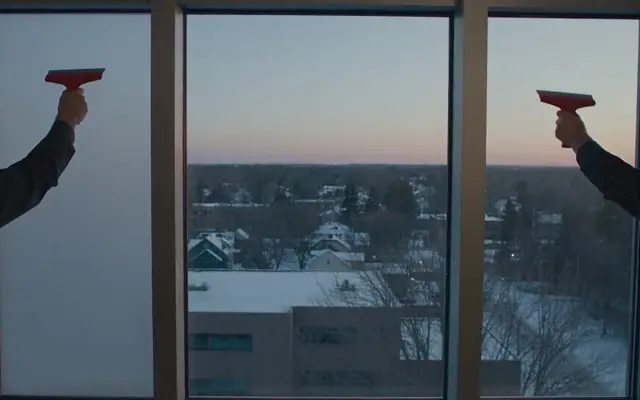 04UV stopped
UV absorbers, built in
Quality films carry UV inhibitors through the whole sheet, so even a nearly clear film can block 99% of UV.
Commercial window tinting -
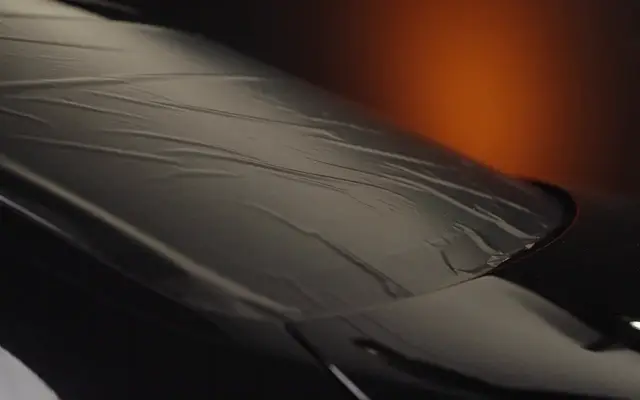 05Laid on the glass
Shrunk, squeegeed, sealed
On curved car glass the film is heat-shrunk to shape outside, then laid inside and squeegeed until no water or air is left.
See how dark you want to go
Window tinting in Ottawa, from a coupe's back glass to a whole west wall
Most people come to window tint for one reason and end up glad of three. You tint a car for the look and notice the cabin is cooler in July. You film a living room window to stop the floor fading and find you can finally see the TV at four in the afternoon. You frost an office boardroom for privacy and the glare on everyone's screen goes with it.
Ottawa Window Tinting does all of it: cars, SUVs, trucks and vans, houses and condos, offices, clinics and storefronts across the city. You see real shades against real glass before you choose, you are told what is legal on a car in Ontario, and you get a price before any work is booked.
Why window tint earns its keep in Ottawa
It is easy to think of tint as a hot-climate thing. Ottawa sits at about 45 degrees north, with long, bright summer days, a low winter sun that comes straight in through the side glass, and snow on the ground that throws light back up at you. Here is what film does about each of those.
- 99%of UVA and UVB is what a window film has to block to earn the Skin Cancer Foundation's Seal of Recommendation. Ordinary window glass stops most UVB, but much of the UVA gets through.
- 68° · 21°roughly how high the sun stands at noon over Ottawa in late June and in late December. The low winter sun is the one that blinds you on the Queensway and floods a south-facing room.
- 70%the least light Ontario's safety inspection standard allows through the windshield and front side windows of a vehicle built in 2017 or later. More on that below.
See your shade before you choose it
Pick a vehicle and a shade for the front and the back. The car below shows roughly how it looks from the sidewalk, and the panel tells you how it sits with Ontario's rules.
Front side windows
Rear side windows and back glass
Choose a shade for the front and the back.
An illustration, not a colour match: real film looks different on every paint colour and in every light.
Ontario tint law, in plain words
Two different rules decide how dark you can go on a car in Ontario, and most of the confusion comes from mixing them up.
The first is the Highway Traffic Act, the law police enforce at the roadside. Section 73 says you may not drive with the windshield, or the windows to the direct left and right of the driver, coated with coloured or reflective material that substantially obscures the inside of the vehicle when it is viewed from outside. It gives no percentage. Whether a front window is too dark is left to the officer's judgment, and a ticket is possible on any car, of any year.
The second is the Ministry of Transportation's standard for safety inspections, the check behind the Safety Standards Certificate you need to sell or re-register a used vehicle. For vehicles built on or after January 1, 2017, it requires at least 70% of light to pass through the windshield and the front side windows, and it limits a windshield sun strip to the top 75 mm or the line marked on the glass.
Behind the driver there is no percentage at all. Rear side windows and the back glass can be as dark as you like, as long as the car has outside mirrors on both sides. That is why most tinted cars in Ottawa wear a dark film on the back and a light ceramic, or nothing, on the front.
When your car comes in, the shades on offer are the ones that keep you inside both rules. If you ask for something darker on the front, you will be told plainly what it means for a ticket and for an inspection, and the choice is yours.
Tint rules for cars in Ontario
- Windshield
- No tint across the driver's view. A sun strip only in the top 75 mm, or down to the line marked on the glass, for vehicles built in 2017 or later.
- Front side windows
- Must not substantially obscure the interior, on any car. On 2017 and newer vehicles, at least 70% light transmission to pass a safety inspection.
- Rear side windows
- No limit in Ontario law.
- Back glass
- No limit, provided the vehicle has outside mirrors on both sides.
- Reflective film
- Mirror-like film on the windshield or front side windows falls under the same rule as coloured film.
A plain-language summary of the Highway Traffic Act, s. 73, and the MTO vehicle inspection standard, not legal advice.
Ontario tint check
Is this window legal?
Three taps: the year of the vehicle, the window and the film.
The vehicle
The window
Film, light through
Types of window film, and what each one is for
The shade is only half the choice. What the film is made of decides how much heat it stops, how long it keeps its colour, and whether it gets along with your phone, your GPS and your toll transponder.
| Film | How it works | Good at | Watch for |
|---|---|---|---|
| Dyed | Dye in the polyester absorbs light. | Looks, privacy, lowest price. | Least heat control. Cheap dyes fade and can turn purple over time. |
| Carbon | Carbon particles absorb light and some infrared. | A deep, matte black that holds its colour. Better heat control than dyed. | Middle of the range on heat. |
| Metallized | Thin metal layers reflect heat. | Strong heat rejection, durable. | A shiny look, and metal can interfere with phone, GPS and radio signals. |
| Ceramic | Non-metallic ceramic particles reject infrared. | The most heat stopped for a given shade, clear signals, no fading. | Costs more. Worth it for heat, less so if you only want looks. |
| Clear UV and IR | Nearly invisible film with UV absorbers and infrared rejection. | Front windows and windshields where darkness is limited, and homes that want light. | On the front of a 2017 or newer car, choose 70% or lighter. |
| Low-E (homes) | A low-emissivity coating reflects room heat back inside. | Winter comfort and summer heat control on older windows. | Needs the right glass; ask whether your windows suit it. |
| Frosted and decorative | Etched-look or patterned film scatters light. | Privacy that works day and night, glass walls, bathrooms, bird-safe markers. | Blocks the view as well as the people. |
| Safety and security | Thick, tough polyester holds broken glass together. | Ground-floor windows, glass doors, storefronts. | Best with edge anchoring on doors and large panes. |
General characteristics of each film type. Exact performance depends on the product and the glass, and is listed on each film's specification sheet.
Which film is right for you?
Say where the glass is and what you want from it. The answer names a film type and why, the same way it would be explained in person.
Where is the glass?
What matters to you? Pick all that apply.
Window tinting work across Ottawa
The four main services have their own pages. This is everything that goes with them, grouped the way people usually ask.
Window film at home: the sun moves, and so does the problem
On a car, the sun can come from any side. On a house, it follows the same path every day, and that makes window film for a home a much more precise job. A west-facing living room is pleasant until about two in the afternoon and then too bright to use. A south-facing kitchen bakes in July and, because the winter sun sits so low, is full of glare in January. East-facing bedrooms wake you at five in June.
That is why the first question at home is not how dark, but which windows and why. A clear heat-control film on the west glass may do more than a dark film on every window in the house. A low-E film on old double-pane windows can keep a room warmer in February as well as cooler in August. A frosted film on a bathroom or a street-facing front door gives privacy without curtains, day and night.
The glass matters as well. Large sealed units, tinted or low-E glass and windows in full sun can run hot under the wrong film, which strains the seal. A good installer checks the glass type, size and shading before recommending a film, and uses the film maker's own guidance on which films suit which glass.
The tool beside this shows where the sun is over Ottawa at any hour and date, and which side of a house it is hitting.
Sun on your windows
Where is the sun over Ottawa?
Pick a date and an hour. The compass shows where the sun is, how high it stands, and which sides of a house it is shining on.
- Height
- -
- Direction
- -
- Sunrise · sunset
- -
Calculated for Ottawa (45.42° N, 75.70° W) in local time, daylight saving included. Accurate to within a few minutes.
Day and night privacy
Who can see through it?
Window film does not give the same privacy at every hour. Pick the film and the time, and see the window from the street.
The film
The time
How it goes
You call or ask for a price
Tell us the car, or the windows and what bothers you about them. For a home or office, a few photos of the windows and the direction they face help. You get the film options, the shades that make sense and a price before anything is booked.
You see the film on real glass
Shade samples are held up against your own windows, because a 35% film looks different on a black SUV than on a white sedan, and different again on a north window than a west one.
It is cut, laid and sealed
The glass is cleaned to the edges, the film is cut to fit, heat-shrunk where the glass curves, then laid on with a slip solution and squeegeed until no water or air is left. Most cars take a few hours. Homes and offices depend on the number of windows.
After the tint goes on
Window film is laid on wet. A slip solution lets it be moved into place, and the squeegee pushes most of that water out. What is left has to evaporate through the film, and until it does the film can look a little hazy or show small water pockets. That is normal, and it clears on its own.
How long it takes depends almost entirely on the weather. In summer, with the sun on the glass, a few days is usually enough. In an Ottawa winter it can take a couple of weeks or more, which is why cars tinted in the cold are best kept in a garage at first.
- Keep the windows up for at least three to four days, longer in cold or damp weather. Rolling them down too soon can catch and lift the bottom edge.
- Leave the water pockets alone. Do not push them out with a finger. They go as the film cures.
- Do not clean the inside glass for a week. After that, use a soft cloth and an ammonia-free cleaner.
- Watch the seat belt and the ice scraper near the edges of the film. Scrape the outside of the glass only.
- The rear defroster is safe to use once the film has cured. Film goes on the inside, over the lines, and does not stop them working.
Cure countdown
When can the windows go down?
Enter the day the tint went on and the weather that week.
The weather
- Windows up until
- -
- Haze usually gone by
- -
- Clean the inside glass after
- -
Typical times, not a guarantee. Your installer's advice for your film comes first.
Window tinting for every part of Ottawa
Ottawa Window Tinting works across the city, inside and outside the Greenbelt. Cars are tinted indoors, out of the dust and the cold. Homes and offices are done where they are.
Orleans
The east end's long commute on the 174 into a morning sun, and plenty of south- and west-facing family homes. See window tinting in Orleans.
Kanata and Stittsville
Westbound on the 417 into the evening sun, newer homes with big glass, and the offices of Kanata North. See window tinting in Kanata.
Barrhaven and Riverside South
Fast-growing streets of new houses, often with tall great-room windows and patio doors, and a lot of SUVs and minivans.
Nepean
Older bungalows and split-levels with original windows, where low-E and UV film can do more than you might expect.
Centretown, the Glebe and Westboro
Condos with floor-to-ceiling glass, street-level shops, and the privacy problem of a ground-floor window on a busy sidewalk.
Downtown and the ByWard Market
Offices, clinics, restaurants and storefronts that need solar control, frosted privacy film or window graphics.
Gloucester and Alta Vista
Family homes and commuters on Hunt Club, Bank Street and the 417, and the clinics around the hospital campus.
Manotick and the rural south
Long drives on the 416 and Prince of Wales, and country homes with big views worth keeping.
Questions people ask
How dark can I tint my car windows in Ontario?
Behind the driver, as dark as you like, as long as the car has outside mirrors on both sides. The windshield and front side windows must not substantially obscure the interior, and on vehicles built in 2017 or later they need at least 70% light transmission to pass a safety inspection. See Ontario tint law.
How long does window tinting take?
Most cars take two to four hours, depending on the number of windows and how curved the back glass is. A home or office depends on the number and size of the windows, from an hour or two to a full day.
Is ceramic tint worth it?
If heat is the reason you are tinting, usually yes. Ceramic film stops more of the sun's infrared for a given shade than dyed or carbon film, keeps its colour, and has nothing metallic in it to interfere with phone or GPS signals. If you only want the look, carbon is a good, less costly choice.
When can I roll my windows down after tinting?
Wait at least three to four days, and longer in cold or damp weather. In an Ottawa winter it can take a couple of weeks for the film to cure fully. The cure countdown gives a date for your install.
Will window tint stop my rear defroster from working?
No. The film goes on the inside of the glass, over the defroster lines, and the lines keep working. Removing old film is the risky part, which is why it should be done with steam and care.
Can you tint a car in the winter?
Yes. Cars are tinted indoors, in a warm bay. The only difference in winter is that the film takes longer to cure, so the windows should stay up for longer afterwards.
Does window film work in the winter at home?
Low-E window films reflect heat from the room back inside, which can make a room near old windows feel warmer. Most solar films are chosen for summer heat and glare, so say which matters more to you.
Will window film void my home window warranty?
It can, with some window makers and some combinations of film and glass, because the wrong film on a large sunlit sealed unit can make it run hot. Check your window warranty, and ask which films the film maker approves for your type of glass.
Does one-way mirror film give privacy at night?
No. Reflective film only works when it is brighter outside than inside. At night, with the lights on indoors, people can see in. For privacy around the clock, use frosted or decorative film, or curtains after dark.
Can old or purple tint be removed?
Yes. The film is softened with steam and peeled off, and the leftover adhesive is cleaned from the glass. On the back glass it is done carefully so the defroster lines are not damaged.
Tell us what you want to tint
613-851-7831Call for the quickest answer. Or send the form with the car, or the windows and what bothers you about them, and you will get a call back with the film options and a price.